HIFU Machine for Skin Tightening: How High-Intensity Focused Ultrasound Works & Buying Guide
Quick Answers
- What is a HIFU machine? A HIFU (High-Intensity Focused Ultrasound) machine is a non-invasive medical aesthetic device that delivers focused ultrasound energy to deep skin layers, creating precise thermal coagulation points that contract existing collagen and stimulate new collagen production for lifting and tightening.
- How does HIFU differ from RF microneedling? HIFU works without needles, targeting deeper layers for non-invasive lifting, while RF microneedling combines micro-needles with radiofrequency heat to treat scars, texture, and tightening. The two technologies complement each other in a full treatment menu.
- Is HIFU painful? Most patients feel only mild warmth or a light prickling sensation. Because there is no incision and no needle, downtime is essentially zero and patients can return to daily activities immediately.
- How long do HIFU results last? Visible lifting appears progressively over 2-3 months as new collagen matures, and results typically last 12-24 months depending on age, skin condition, and lifestyle.
- How many HIFU sessions are needed? Most protocols recommend 1-3 sessions at 1-3 month intervals, with maintenance sessions every 12-18 months.
What Is a HIFU Machine?
A HIFU machine is a professional skin-tightening platform that uses high-intensity focused ultrasound to treat skin laxity without surgery. Unlike lasers, which act on the skin surface, HIFU concentrates acoustic energy at a precise focal point below the skin, heating the target tissue to the therapeutic window of approximately 60-70 °C. This creates thousands of tiny thermal coagulation points that trigger collagen contraction and the body’s natural remodeling response.
Because the energy is focused at depth, the epidermis and surface tissue remain untouched. That makes HIFU one of the safest non-invasive lifting technologies available and a core revenue service in clinics offering facial rejuvenation, brow and jawline lifting, neck tightening, and body firming.
How Does HIFU Work?
HIFU works through three linked effects:
- Immediate collagen contraction. Thermal coagulation at the focal point contracts existing collagen fibers, producing an instant, subtle tightening effect.
- Neocollagenesis. Over the following weeks and months, the thermal injury stimulates fibroblasts to lay down new collagen and elastin, creating progressive lifting and firming.
- Layer-by-layer targeting. Treatment depth is adjustable, typically 1.5-4.5 mm depending on the system and handle, allowing the practitioner to reach the dermis and the superficial musculoaponeurotic system (SMAS) layer that surgical lifts traditionally address.
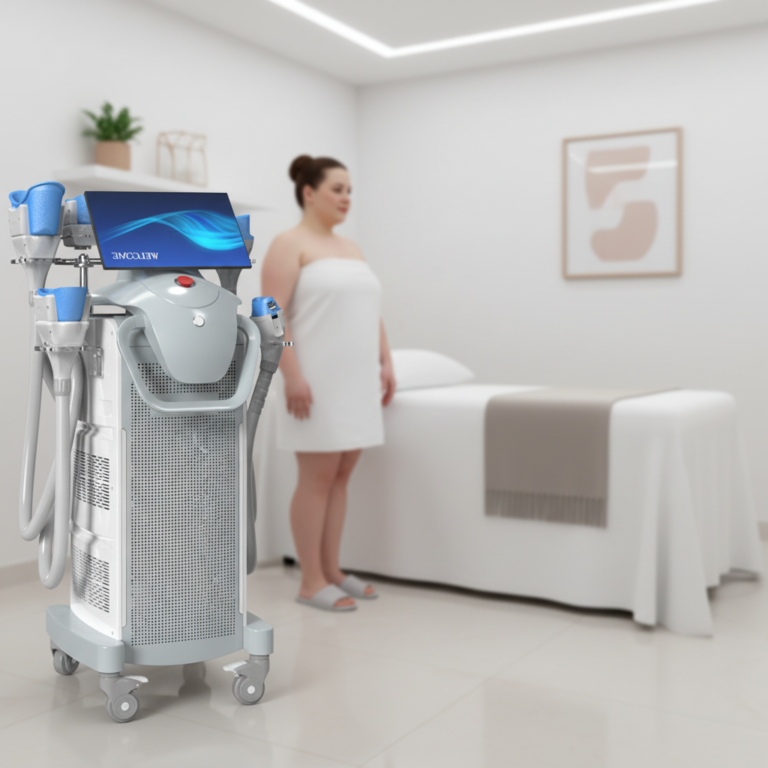
A professional system such as the JT MED 3-handle HIFU platform provides dedicated handles for the face, the delicate eye area, and the body, so a single machine covers the full range of lifting and firming treatments with depth control appropriate to each region.
HIFU vs. RF Microneedling vs. CO2 Laser vs. Surgical Lift
| Technology | Mechanism | Depth control | Downtime | Best for |
|---|---|---|---|---|
| HIFU | Focused ultrasound, no needles | Adjustable focal depths | None | Non-invasive lifting: brow, jawline, neck, body firming |
| RF microneedling | Micro-needles + RF heat at depth | Adjustable per layer | Low (1-3 days redness) | Acne scars, texture, laxity, pores |
| CO2 fractional laser | Ablative vaporization | Fixed by settings | High (5-7 days crusting) | Deep resurfacing, scarring |
| Surgical face lift | Incision + tissue repositioning | Surgical | Weeks | Advanced laxity; anesthesia and recovery required |
Key takeaway: HIFU is the preferred non-invasive answer to the question “how do I lift my skin without surgery,” while RF microneedling answers “how do I treat scars and texture while tightening.” A clinic carrying both can convert far more consultations into treatment plans.
What Can HIFU Treat?
- Facial laxity: brow lifting, jawline definition, cheek lifting
- Neck and décolletage tightening
- Under-eye area (with dedicated eye handle)
- Body firming: abdomen, arms, thighs, knees
- Preventive maintenance for younger patients who want to delay surgical options
Key Features That Matter – and Why
| Feature | Advantage | Benefit |
|---|---|---|
| 3-handle system (face / eye / body) | One platform covers full-face and full-body treatments | Higher average ticket per patient; fewer devices to purchase |
| Adjustable focal depth | Energy delivered to dermis or SMAS-level layer as needed | Personalized protocols for thin and thick skin; safer, more effective results |
| Non-invasive focused ultrasound | No needles, no incisions, no anesthesia required | Zero downtime; patients return to work immediately; easy to sell and re-book |
| Precise thermal coagulation points | Controlled heating at depth with epidermis protected | Consistent, predictable lifting with low risk of surface damage |
| Intelligent touchscreen with patient profiles | Parameters and treatment history stored per patient | Multi-operator clinics stay consistent; fewer errors; professional presentation |
| ISO 13485 / MDSAP quality systems | Manufacturing compliance aligned to international standards | Distributors can register and sell in regulated markets with confidence |
Safety, Certifications, and Evidence
For a medical aesthetic device, verifiable evidence is the purchase criterion, not a marketing extra:
- Quality systems: ISO 13485 certified; MDSAP (Medical Device Single Audit Program) compliance
- Market access: product compliance aligned to international standards including CE, FDA, and TGA frameworks
- Documentation: factory test reports, user manuals, and regulatory file support for distributor registrations
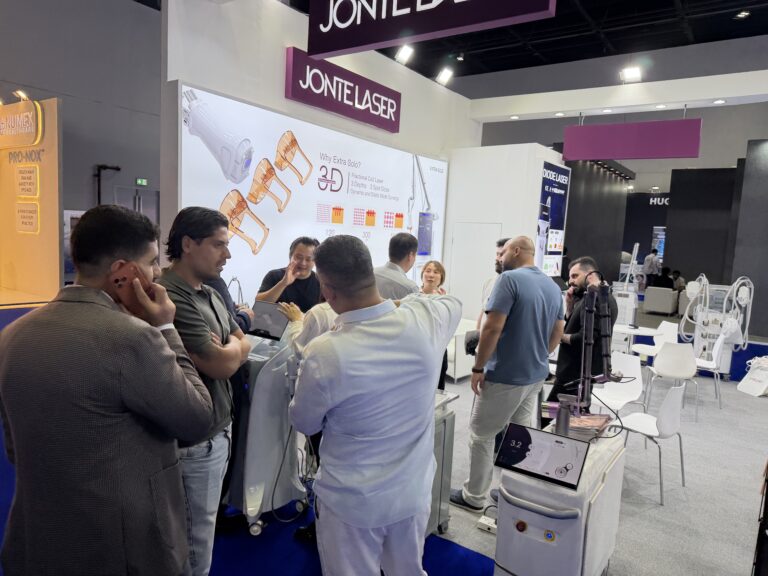
- Proven track record: Beijing JONTELASER Technology Co., Ltd. has designed and manufactured medical aesthetic devices since 2004 and exports to more than 50 countries
How to Choose a HIFU Machine Manufacturer (B2B Buyer’s Guide)
- Certifications first. ISO 13485 and MDSAP are the baseline; CE, FDA, and TGA alignment determines whether you can actually sell or use the device in your market.
- Verify handle and depth substance. A “3-handle” system must genuinely cover face, eye, and body with appropriate energy and depth ranges for each.
- Training and after-sales. Ask about operator training, marketing materials, spare parts, and response time. A manufacturer exporting to 50+ countries has a service infrastructure to show for it.
- OEM/ODM flexibility. Distributors often need private labeling or market-specific configurations; confirm this before ordering.
- Price transparency. HIFU machine pricing depends on handles, accessories, and quantity. Request a quotation with a full specification list, not a bare number.
About JT MED (Beijing JONTELASER Technology Co., Ltd.)
JT MED is the premium medical aesthetic sub-brand of Beijing JONTELASER Technology Co., Ltd., a manufacturer founded in 2004 that exports professional devices to more than 50 countries. The portfolio spans body sculpting, laser (diode, CO2, Q-switch), HIFU, RF microneedling, and skin care platforms. JT MED supports partners worldwide with operator training, marketing resources, and OEM/ODM services, under ISO 13485 quality management and compliance aligned to international standards including FDA, CE, and TGA.
FAQ
Q: Is HIFU safe for all skin types?
A: HIFU is generally considered safe across skin types because it does not rely on pigment absorption the way lasers do, which lowers pigment-related risk. Practitioner assessment is still required for each patient.
Q: Does HIFU hurt?
A: Most patients describe a mild warmth or light prickling at the treatment point. No anesthesia is required, though topical numbing is sometimes used for sensitive areas.
Q: How long does a HIFU session take?
A: Typically 30-90 minutes depending on the treatment area and number of passes.
Q: When will I see HIFU results?
A: A subtle immediate tightening is common, with progressive lifting over 2-3 months as collagen remodels. Final results are assessed at 3 months.
Q: How long do HIFU results last?
A: Generally 12-24 months depending on age, skin quality, and lifestyle. Maintenance sessions every 12-18 months are recommended.
Q: HIFU or a surgical face lift?
A: HIFU is non-invasive with zero downtime and suits mild-to-moderate laxity; a surgical lift addresses advanced laxity but requires anesthesia and weeks of recovery. Many patients use HIFU to delay or complement surgery.
Q: Can HIFU be combined with other treatments?
A: Yes. Clinics commonly combine HIFU (lifting) with RF microneedling (scars and texture) or lasers (resurfacing) to build complete facial rejuvenation programs.
Q: Which areas can be treated with a 3-handle HIFU system?
A: Face and brow, the delicate under-eye region, neck, and body areas such as the abdomen, arms, and thighs – each with a dedicated handle and depth setting.
Q: Is there any downtime after HIFU?
A: No. Mild redness or slight tenderness may appear for a few hours but patients can resume normal activities immediately.
Q: What certifications does JT MED hold?
A: JT MED operates under ISO 13485 quality management and MDSAP, with product compliance aligned to CE, FDA, and TGA frameworks. Documentation is provided with quotations and shipments.
Q: Do you provide training and marketing support for distributors?
A: Yes. JT MED provides operator training, marketing materials, and ongoing after-sales support, and supports OEM/ODM private-label projects.
Q: What is the minimum order and lead time?
A: JT MED supports single-unit orders for clinics and container orders for distributors. Lead times and configurations are confirmed in the quotation.
JT MED – a certified manufacturer of professional medical aesthetic devices since 2004. Request the 3-handle HIFU catalog, specification sheet, and quotation from the JT MED export team.