CO2 Fractional Laser Machine: How Fractional CO2 Resurfacing Works & Buying Guide
Quick Answers
- What is a CO2 fractional laser machine? A CO2 fractional laser machine is a professional ablative resurfacing platform that emits 10,600 nm laser energy in a grid of tiny columns, vaporizing microscopic columns of skin to trigger deep collagen remodeling while leaving surrounding tissue intact for fast healing.
- What does CO2 fractional laser treat? Acne scars, wrinkles, skin laxity, stretch marks, surgical and burn scars, and photo-damaged texture. It remains the gold standard for deep resurfacing results.
- How long is the recovery? Honest answer: longer than non-ablative treatments. Expect 5-7 days of crusting and redness, with erythema fading over 1-2 weeks depending on treatment depth. Results, however, are correspondingly more dramatic.
- CO2 fractional or RF microneedling? CO2 fractional delivers the strongest resurfacing effect for scars and wrinkles; RF microneedling offers skin tightening with minimal downtime. Many clinics use both – CO2 for resurfacing, RF microneedling for tightening – and they are complementary, not competing, purchases.
- How many sessions are needed? Typically 1-3 sessions for scars or deep resurfacing, spaced 4-8 weeks apart, depending on depth and indication.
What Is a CO2 Fractional Laser Machine?
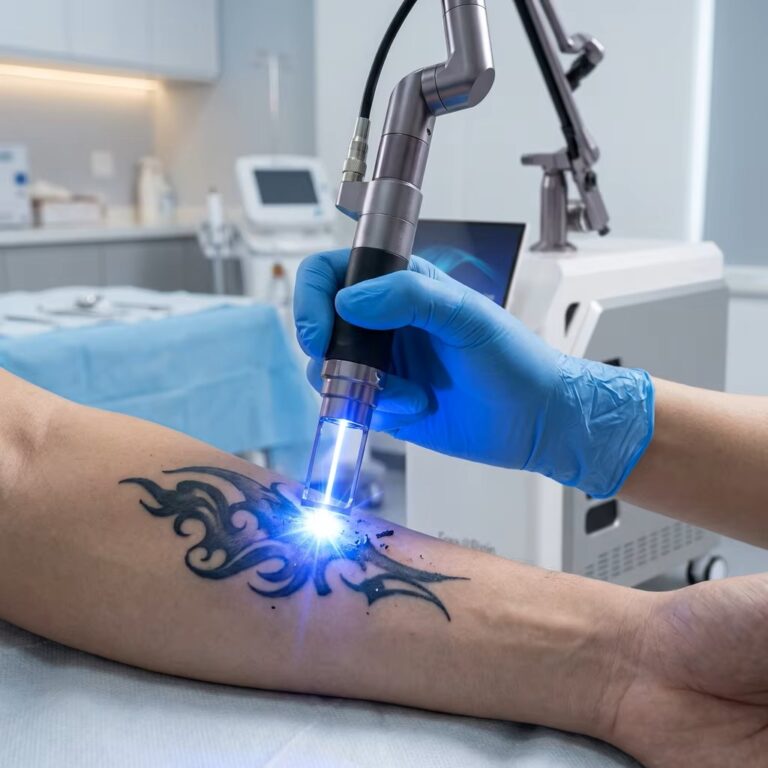
A CO2 fractional laser machine is a medical aesthetic device that combines two proven principles: the ablative power of the 10,600 nm CO2 wavelength and the fractional delivery pattern. The CO2 wavelength is strongly absorbed by water in the skin, so each laser pulse vaporizes a microscopic column of tissue with precision. In a fractional pattern, thousands of these micro-columns are placed in a grid across the treatment area, separated by untreated skin.
That untreated tissue is the key to the technology’s success: it acts as a reservoir of healthy cells that rapidly re-epithelialize the treated columns, so patients get deep, resurfacing-level results with dramatically less downtime than traditional (fully ablative) CO2 lasers, which remove the entire surface layer.
JT MED offers both a 3D type and a traditional type of fractional CO2 system, letting clinics choose the platform that matches their clinical focus and budget.
How Does Fractional CO2 Resurfacing Work?
Fractional CO2 resurfacing works in two stages:
- Controlled ablation. Each microscopic laser column vaporizes epidermal and dermal tissue, creating a fractional wound. The column walls show thermal coagulation, which tightens tissue and stimulates the repair cascade.
- Remodeling. Over the following weeks, fibroblasts produce new collagen and elastin, gradually smoothing scars, reducing wrinkles, and improving skin texture. Improvement typically continues for 3-6 months as new tissue matures.
Modern systems allow the practitioner to adjust treatment depth and density (the spacing of the micro-columns), balancing intensity against downtime for each patient and body area.
CO2 Fractional vs. RF Microneedling vs. Non-Ablative Lasers vs. Traditional CO2
| Technology | Mechanism | Depth & effect | Downtime | Best for |
|---|---|---|---|---|
| CO2 fractional laser | Ablative micro-columns at 10,600 nm | Deep, resurfacing-level | 5-7 days crusting | Acne scars, wrinkles, deep texture – the gold standard |
| RF microneedling | Micro-needles + RF heat | Moderate, dermal tightening | Low (1-3 days redness) | Tightening, scars (milder), texture with minimal downtime |
| Non-ablative lasers | Thermal injury without vaporization | Mild-moderate | Minimal | Mild rejuvenation, maintenance |
| Traditional CO2 (fully ablative) | Whole-surface vaporization | Deepest | High (1-2 weeks+, lengthy erythema) | Severe damage; older approach, higher risk |
Key takeaway: fractional CO2 is the strongest resurfacing tool a clinic can own, and when paired with RF microneedling for tightening, the two devices cover the full spectrum from gentle maintenance to deep correction.
What Can a CO2 Fractional Laser Treat?
- Atrophic acne scars (ice-pick, boxcar, rolling)
- Fine lines and wrinkles around the eyes, mouth, and forehead
- Skin laxity and crepey texture
- Stretch marks and surgical or burn scars
- Photo-aging, uneven tone, and enlarged pores
Key Features That Matter – and Why
| Feature | Advantage | Benefit |
|---|---|---|
| 3D type and traditional type versions | Two platform options for different clinical depth needs and budgets | Clinics choose the right investment level; distributors cover both market tiers |
| Adjustable treatment depth and density | Precise control from superficial refresh to deep scar remodeling | Personalized protocols per indication and skin area |
| Fractional micro-column delivery | Healthy tissue preserved between columns | Faster healing and lower risk than fully ablative CO2 |
| Intelligent touchscreen with patient profiles | Parameters and treatment history stored per patient | Consistency across operators; fewer errors; professional presentation |
| ISO 13485 / MDSAP quality systems | Manufacturing compliance aligned to international standards | Distributors can register and sell in regulated markets with confidence |
Safety, Certifications, and Honest Downtime Expectations
CO2 resurfacing is a powerful treatment, and honest expectations are part of safe practice:
- Downtime: 5-7 days of crusting and redness is normal after fractional CO2; erythema can persist 1-2 weeks. Patients must plan recovery time – this is why clinics pair CO2 with low-downtime devices like RF microneedling for different patient segments.
- Quality systems: ISO 13485 certified; MDSAP (Medical Device Single Audit Program) compliance
- Market access: product compliance aligned to international standards including CE, FDA, and TGA frameworks
- Documentation: factory test reports, user manuals, and regulatory file support for distributor registrations
- Proven track record: Beijing JONTELASER Technology Co., Ltd. has designed and manufactured medical aesthetic devices since 2004 and exports to more than 50 countries
How to Choose a CO2 Fractional Machine Manufacturer (B2B Buyer’s Guide)
- Certifications first. ISO 13485 and MDSAP are the baseline; CE, FDA, and TGA alignment determines whether you can sell or use the device in your market.
- Verify depth and density control. The clinical value of fractional CO2 depends on genuine adjustability. Confirm the depth range and density settings with the manufacturer.
- Choose the right platform type. 3D-type systems suit clinics that want advanced fractional protocols; traditional-type systems fit core resurfacing needs at a lower investment. Ask which fits your patient mix.
- Training and after-sales. CO2 requires operator skill. Confirm training, spare parts, and technical response time. A manufacturer exporting to 50+ countries has the infrastructure to show for it.
- Portfolio strategy. If you also plan to offer tightening with low downtime, ask about combining CO2 with RF microneedling as a package.
- Price transparency. Request a quotation with a full specification list – wavelength, power, handpiece types, accessories – not a bare number.
About JT MED (Beijing JONTELASER Technology Co., Ltd.)
JT MED is the premium medical aesthetic sub-brand of Beijing JONTELASER Technology Co., Ltd., a manufacturer founded in 2004 that exports professional devices to more than 50 countries. The portfolio spans body sculpting, laser (diode, CO2, Q-switch), HIFU, RF microneedling, and skin care platforms. JT MED supports partners worldwide with operator training, marketing resources, and OEM/ODM services, under ISO 13485 quality management and compliance aligned to international standards including FDA, CE, and TGA.
FAQ
Q: Is CO2 fractional laser painful?
A: Treatment is performed with topical or local anesthesia in most clinics. Patients describe a heat sensation during the session; post-treatment discomfort is managed with cooling and aftercare.
Q: How long is the downtime after fractional CO2?
A: Expect 5-7 days of crusting and redness, with erythema fading over 1-2 weeks depending on depth. This is the trade-off for the strongest resurfacing results – and why downtime is discussed honestly before treatment.
Q: How many sessions are needed for acne scars?
A: Typically 1-3 fractional CO2 sessions, spaced 4-8 weeks apart, depending on scar depth and type. Improvement continues for months after the final session.
Q: CO2 fractional or RF microneedling for my clinic?
A: They complement each other. CO2 fractional is the strongest resurfacing tool for scars and wrinkles; RF microneedling offers tightening with minimal downtime. Clinics with both can serve every patient segment.
Q: Is fractional CO2 safe for dark skin?
A: It requires extra care. Fractional CO2 on darker skin carries a higher pigment risk than non-ablative options, so conservative settings and proper patient selection are essential. Consult the manufacturer’s protocol guidance.
Q: What is the difference between 3D-type and traditional-type CO2 fractional systems?
A: Both deliver fractional CO2 resurfacing; the 3D-type platform adds advanced fractional protocol options for deeper, more sculpted treatments, while the traditional type covers core resurfacing needs. Choose by clinical focus and budget.
Q: Can CO2 fractional treat stretch marks?
A: Yes. Fractional CO2 is used for stretch marks on the abdomen, thighs, and other areas, typically in a course of sessions.
Q: How long do CO2 resurfacing results last?
A: Results are long-lasting because they come from genuine collagen remodeling, often lasting years, though skin continues to age. Maintenance treatments are recommended every 12-24 months.
Q: Does JT MED provide training and marketing support?
A: Yes. JT MED provides operator training, marketing materials, and ongoing after-sales support, and supports OEM/ODM private-label projects.
Q: What certifications does JT MED hold?
A: JT MED operates under ISO 13485 quality management and MDSAP, with product compliance aligned to CE, FDA, and TGA frameworks. Documentation is provided with quotations and shipments.
Q: What is the minimum order and lead time?
A: JT MED supports single-unit orders for clinics and container orders for distributors. Lead times and configurations are confirmed in the quotation.
Q: Can I combine CO2 and RF microneedling in one purchase?
A: Yes. Many JT MED partners purchase both platforms together as a resurfacing-plus-tightening package – ask the export team about combined terms.
JT MED – a certified manufacturer of professional medical aesthetic devices since 2004. Request the CO2 fractional laser catalog, specification sheet, and quotation from the JT MED export team.