
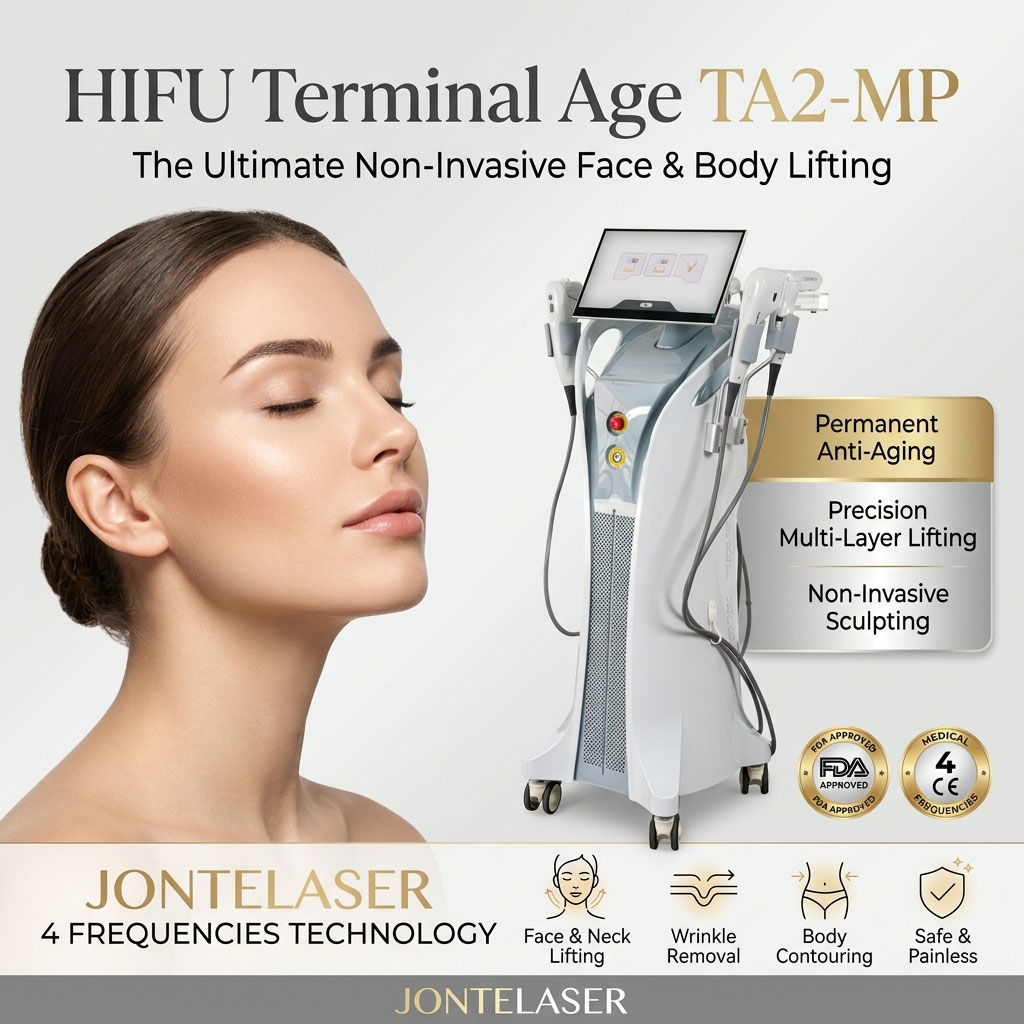
Direct answer: HIFU (High-Intensity Focused Ultrasound) lifts and tightens the face by delivering focused acoustic energy to precise depths below the skin surface — most importantly the SMAS (superficial musculoaponeurotic system), the same fibrous connective-tissue layer a surgical facelift manipulates. The ultrasound beam passes through the epidermis and dermis without injuring them, then converges at a focal point where it heats tissue to 60–70°C, creating micro-coagulation zones that contract the SMAS immediately and trigger new collagen and elastin production over the following months. The result is a non-invasive “SMAS lift” with no incisions, no downtime, and progressive tightening that clinical studies — and 20+ years of aesthetic practice — have established as the benchmark non-surgical lifting modality.
What Is the SMAS — and Why It Is the Real Target of Any “Lift”
The SMAS (superficial musculoaponeurotic system) is a continuous sheet of fibrous connective tissue and muscle that wraps the mid and lower face, connecting the facial muscles to the skin via retaining ligaments. It is the architectural layer that holds facial soft tissue in place.
Facial aging is not just skin deep: as the SMAS loses elasticity and the retaining ligaments stretch, the underlying fat compartments descend and the jawline, cheeks, and neck lose definition — the classic “jowling” and marionette lines. This is why the SMAS is the primary structure surgeons lift and suspend in a traditional facelift: lift the SMAS, and everything attached to it lifts with it.
This is the fundamental insight that makes HIFU remarkable: it is the first technology that can reach and treat the SMAS layer non-invasively — without cutting through skin, fat, and muscle to get there.
How HIFU Reaches the SMAS Without Touching the Skin
Ultrasound energy has a unique property among aesthetic modalities: it penetrates tissue harmlessly until it reaches a focal point, where the acoustic energy converges and becomes intensely concentrated.
- The transducer emits a focused beam from a handpiece pressed against the skin.
- The beam passes through the epidermis and dermis — at these depths, the energy density is too low to cause damage.
- At the focal point — at a precisely engineered depth (typically 1.5mm, 3.0mm, or 4.5mm) — the energy converges and raises tissue temperature to 60–70°C within a fraction of a second.
- Thermal coagulation points (TCPs) — tiny, well-defined zones of denatured tissue (~1mm³ each) — are created in a grid pattern across the treatment area.
The system then relies on two separate effects, which is why HIFU results arrive in two waves:
- Immediate effect: the SMAS and dermal collagen contract thermally at the moment of treatment — an instant, visible tightening.
- Delayed effect: over 4–12 weeks, the body’s wound-healing response floods the TCPs with fibroblasts, depositing new collagen and elastin — a remodeling process that progressively thickens and tightens the tissue for months after the session.
Modern devices also incorporate micro-focused ultrasound with visualization (MFU-V) — real-time ultrasound imaging that lets the practitioner see the exact tissue depth before firing, so every shot lands precisely on the intended layer and avoids critical structures.
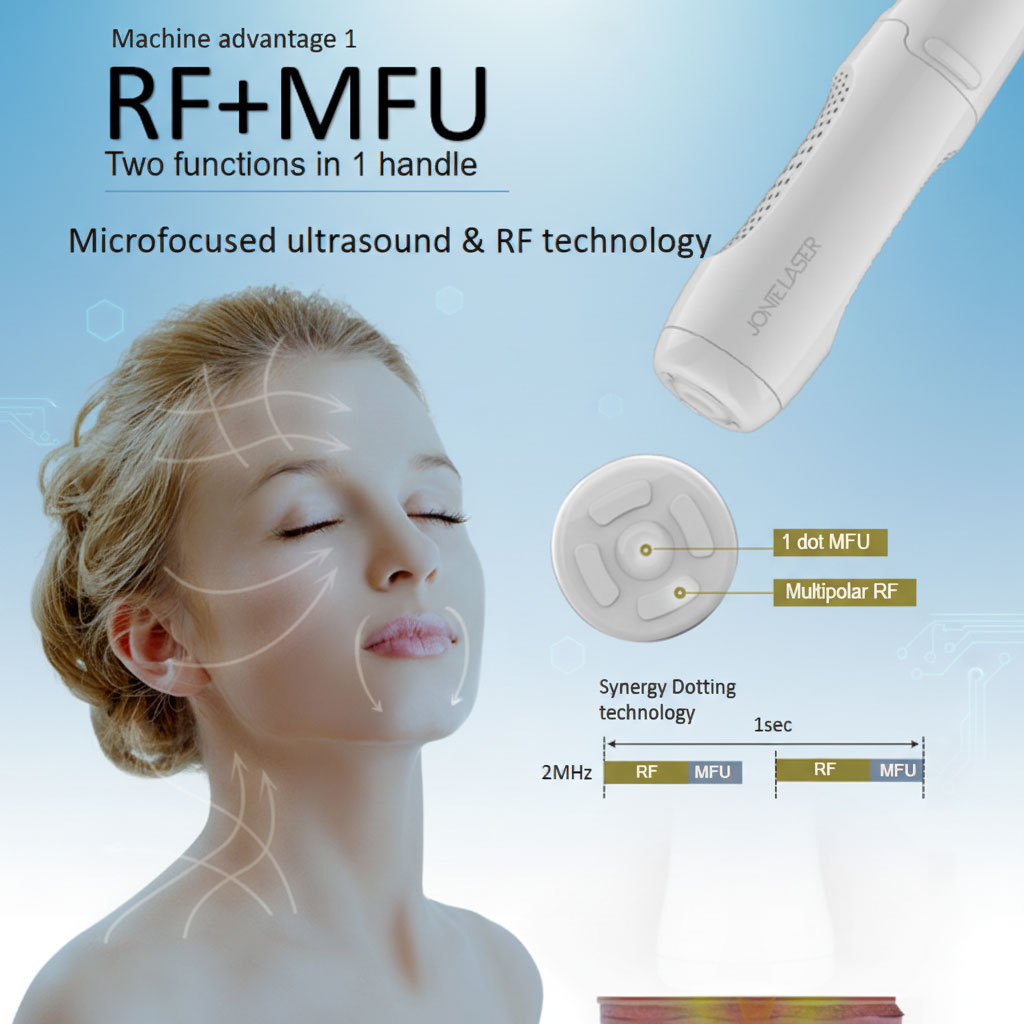
The Three Depths: What Each Layer Does
| Focal depth | Tissue layer | What it achieves |
|---|---|---|
| 1.5mm | Superficial dermis | Fine-line improvement, skin texture, periorbital refinement |
| 3.0mm | Deep dermis / subdermal | Dermal tightening, collagen remodeling, midface fullness |
| 4.5mm | SMAS layer | The true “lift”: SMAS contraction and suspension — jawline, cheek, brow, and neck definition |
The 4.5mm transducer is the signature of a genuine HIFU “SMAS lift” — it is the depth at which the machine reproduces, non-invasively, the anatomical target of a surgical facelift. Many protocols also use 1.5–3.0mm passes in the same session for a layered, full-thickness effect.
What the Clinical Evidence Shows
The mechanism is not theoretical — it is supported by two decades of published data:
- FDA clearance and regulatory standing: HIFU is FDA-cleared for upper and lower face, neck laxity, and décolleté rejuvenation, and it produces micro-focused thermal damage specifically on the dermis and the superficial muscular aponeurotic system. It is the only non-invasive modality with this depth-targeting clearance profile.
- Meta-analytic confirmation: a 2023 systematic review and meta-analysis of micro-focused ultrasound for facial rejuvenation and tightening (Ling & Zhao, 2023) confirmed significant efficacy and high patient satisfaction across studies; a 2021 systematic review (Khan & Khalid, 2021) reached the same conclusion for MFU skin rejuvenation and tightening.
- Benchmark status in head-to-head data: a 2025 comparative study of 171 patients explicitly describes HIFU as “the benchmark noninvasive lifting modality.” The study — which used 600 shots at 3.0mm and 4.5mm depths targeting the dermis and SMAS — found that although a competing microwave device acted faster and was less painful (2.3 vs. 4.7 on the pain scale), by 3 months HIFU delivered stronger sustained lifting, elasticity gains, and patient satisfaction scores. Both modalities were safe with only mild, transient effects.
- Randomized and prospective data: a randomized blinded prospective study of ultrasound rejuvenation of the upper face (2024) reported significant improvement, and a 2026 prospective trial of micro-focused ultrasound for middle and lower face rejuvenation in 20 patients confirmed efficacy and safety in a population with typical age-related laxity.
The consistent pattern: HIFU is not the fastest-acting or least-painful device on the market, but it is the one with the deepest anatomical reach and the strongest long-term lifting evidence — exactly what a “gold-standard non-surgical lift” should be judged on.
What a Realistic HIFU Treatment Looks Like
- Session length: 30–90 minutes depending on area (face, neck, or both).
- Comfort: most patients feel a warm prickling sensation at each shot; topical anesthetic or oral analgesics are commonly used. Pain scores in clinical trials average ~4–5/10 — noticeable but transient.
- Aftercare: mild redness and slight swelling for a few hours to a day; no downtime, no bandages, no social pause.
- Results timeline: immediate mild tightening → progressive improvement peaking at 2–3 months → results typically maintained 12–18 months, with annual touch-up sessions recommended.
- Candidate profile: best for mild-to-moderate laxity in the 30s–50s. Patients with severe skin laxity or heavy jowling are better served by a surgical facelift — HIFU cannot replace surgery, but it can postpone it and maintain the result afterward.
Safety and Precautions
HIFU’s safety record is strong when parameters and anatomy are respected:
- Common effects are transient: erythema, mild edema, occasional temporary numbness or tingling in treated zones.
- The most serious risk — facial nerve injury — is anatomical: treatments avoid the facial nerve danger zones (perioral, temporal branch areas), which is why MFU-V visualization and practitioner training matter.
- Contraindications include active skin infection, open wounds, pregnancy, and implanted electronic devices in the treatment field; very thin skin and certain bony areas (e.g., periorbital rim) require conservative settings or avoidance.
HIFU vs. the Alternatives: Where It Fits
| Modality | Reaches SMAS? | Invasive | Downtime | Result depth |
|---|---|---|---|---|
| Surgical facelift | Yes (directly) | Yes | 2–4 weeks | Highest — the gold standard for severe laxity |
| HIFU (MFU/MFU-V) | Yes (non-invasively) | No | None | High — true SMAS contraction + collagen remodeling |
| Radiofrequency (RF) tightening | Partially (heat diffusion) | No | None | Low–medium — dermal heat, no focused deep layer |
| Laser resurfacing | No | No (ablative variants yes) | 3–14 days | Skin surface only — texture, not lift |
| Thread lift | Partially (mechanical) | Minimal | 1–3 days | Medium — mechanical suspension, temporary |
The positioning is clear: HIFU is the deepest-reaching non-invasive option — the closest a no-downtime treatment comes to the anatomical target of surgery — while RF and lasers address skin quality rather than structural lift.
FAQ
1. What does SMAS stand for, and why does it matter for lifting? SMAS = superficial musculoaponeurotic system, the fibrous connective-tissue layer that supports the facial soft tissue. It is the structure surgeons lift in a facelift, and its laxity is the main cause of jowls and lost jawline definition — so a true “lift” must address it.
2. How does HIFU reach the SMAS without surgery? HIFU focuses acoustic energy at a precise depth (typically 4.5mm for the SMAS). The beam passes harmlessly through the upper skin layers and only becomes intense at the focal point, where it heats tissue to 60–70°C and creates micro-coagulation zones that contract and remodel the SMAS.
3. Is HIFU a real facelift? It is a non-invasive SMAS lift, not a surgical facelift. It tightens and remodels the same deep layer with no incisions and no downtime, but patients with severe laxity still need surgery — HIFU is best for mild-to-moderate aging and for maintaining surgical results.
4. When do HIFU results appear, and how long do they last? Some tightening is visible immediately; the full effect develops progressively over 2–3 months as new collagen forms, and results typically last 12–18 months with annual touch-ups.
5. Is HIFU painful? Most patients feel a warm prickling sensation with each pulse. Clinical studies report average pain scores around 4–5/10 — noticeable but transient — and topical anesthetics are commonly used.
6. Is HIFU safe? Yes, with correct technique: published trials report only mild, transient side effects (redness, swelling). The main serious risk — facial nerve injury — is avoided by anatomical protocols and real-time ultrasound visualization (MFU-V) that shows the tissue depth before each shot.
7. Which is better: HIFU or radiofrequency (RF) tightening? For a true lift, HIFU has the advantage: it delivers focused energy to the SMAS layer, while RF delivers diffuse heat to the dermis. RF is gentler and good for skin quality; HIFU is the deeper, structural option.
8. How many HIFU sessions are needed? Usually one session produces the primary result, with a touch-up at 12–18 months. Some protocols use a second session at 3–6 months for enhanced effect in areas of significant laxity.
Summary
HIFU’s claim to a non-invasive “SMAS lift” rests on one physical fact: focused ultrasound is the only energy modality that can pass through the skin and deposit controlled thermal damage at a deep, anatomically meaningful layer — the SMAS at 4.5mm. The immediate contraction plus the months-long collagen remodeling that follows reproduce, non-surgically, the layer-specific effect of a facelift. Meta-analyses confirm efficacy and satisfaction; head-to-head clinical data call it the benchmark noninvasive lifting modality; and FDA clearance spans the face, neck, and décolleté. HIFU will never replace the scalpel for severe aging — but for patients who want a structural lift without surgery, it remains the deepest, best-evidenced answer.
Sources
- Comparative study: HIFU vs. microwave energy-based device for facial rejuvenation (171 patients; HIFU 600 shots at 3.0/4.5mm targeting dermis and SMAS). Aesthet Surg J. 2025. https://pubmed.ncbi.nlm.nih.gov/41403025/
- Ling J, Zhao H. A systematic review and meta-analysis of the clinical efficacy and patients’ satisfaction of micro-focused ultrasound (MFU) treatment for facial rejuvenation and tightening. Aesthetic Plast Surg. 2023. https://pubmed.ncbi.nlm.nih.gov/37198297/
- Khan U, Khalid N. A systematic review of the clinical efficacy of micro-focused ultrasound treatment for skin rejuvenation and tightening. Cureus. 2021. https://pubmed.ncbi.nlm.nih.gov/35003992/
- Chen W, et al. Ultrasound rejuvenation for upper facial skin: a randomized blinded prospective study. J Cosmet Dermatol. 2024. https://pubmed.ncbi.nlm.nih.gov/39034504/
- Lou Y, et al. Efficacy and safety of micro-focused ultrasound for middle and lower face rejuvenation: a prospective study. Lasers Med Sci. 2026. https://pubmed.ncbi.nlm.nih.gov/41986762/
- Asiran Serdar Z, Tukenmez Demirci G. The efficacy and safety of high-intensity focused ultrasound on upper arm laxity treatment (notes FDA clearance for upper/lower face, neck, décolleté; micro-focused thermal damage on dermis and SMAS). J Cosmet Dermatol. 2020. https://pubmed.ncbi.nlm.nih.gov/31943659/