Building a Profitable HIFU Service Line: Pricing, Scheduling & ROI Framework for Clinics
Quick Answers
- Why is HIFU attractive as a service line? Because it is non-invasive with no downtime, a HIFU session can be scheduled as a routine appointment rather than a procedure with recovery – which raises room utilisation and lets a clinic treat working patients.
- How should a HIFU treatment be priced? Most practices price by anatomical area and by course, using value-based pricing anchored to the clinical outcome rather than a cost-plus calculation. Price against the lifting result, not against machine time.
- What determines payback period? Device investment divided by net revenue per session multiplied by session volume. The three levers are price per treatment, sessions per week, and variable cost per session – improving any one shortens payback.
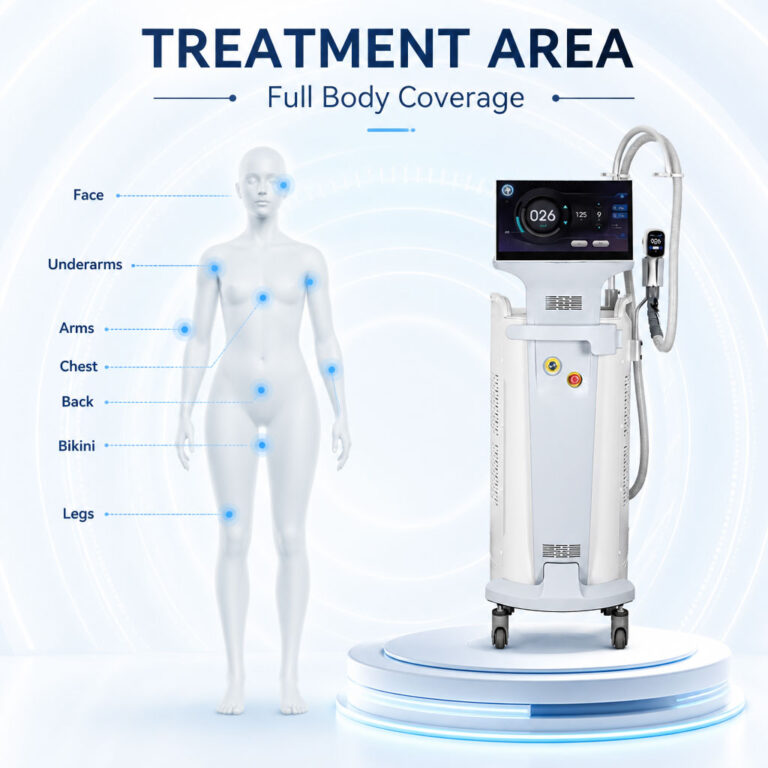
- How do multiple handpieces affect revenue? A face handpiece, an eye handpiece, and a body handpiece convert one device into three service lines, each with its own price point, rather than a single facial treatment.
- What is the biggest commercial risk? Overpromising. HIFU produces progressive lifting over weeks, not an instant surgical result. Poor expectation management creates refunds, complaints, and lost referrals – the most expensive outcome in aesthetic practice.
From Technical Feature to Commercial Advantage
A HIFU platform is an investment, and its return is determined by how its technical characteristics translate into operating economics. The translation is direct:
| Platform characteristic | Operating consequence | Commercial effect |
|---|---|---|
| Non-invasive, no incisions or needles | No recovery period; patient returns to normal activity immediately | Treatable patient population widens; appointments fit working schedules; no post-procedure room recovery |
| No consumable-driven procedure cost | Marginal cost per session is dominated by staff time and room time rather than disposables | Each additional session is high-margin; capacity, not consumables, becomes the constraint |
| Adjustable focal depth | Multiple indications served by one platform – laxity, jawline definition, neck, body | One device supports several priced service lines and different tiers of treatment intensity |
| Multiple handpieces (face, eye, body) | One operator can address different areas in one visit | Combined-area sessions raise average ticket per visit |
| Short session time | Higher room utilisation per clinical hour | More revenue per day from the same premises and staffing |
| Collagen remodelling continues for weeks after treatment | Results develop after the visit | Natural trigger for follow-up appointments and course completion |
Pricing Framework
HIFU pricing should be structured around clinical value and anatomical scope, not machine minutes. Three pricing structures work in practice:
- Per area. Price separately for upper face and brow, mid and lower face with jawline, neck, and body areas. This makes value obvious and allows entry-level pricing for a first-time patient.
- Per course. A course of sessions priced as a package, with the course price reflecting the cumulative collagen-remodelling outcome rather than the count of visits.
- Membership or maintenance programme. Because collagen remodelling continues and ageing does not stop, a maintenance interval creates predictable repeat revenue rather than one-off transactions.
Practical rule: an entry treatment should be priced so that a patient can experience a defined result without committing to the full facial programme, and the full programme should be priced to make the upgrade the obvious choice.
Cost Structure: What to Count
| Cost category | Nature | Management lever |
|---|---|---|
| Device investment | Fixed, one-time (or financed) | Handpiece configuration at purchase determines how many service lines you can sell |
| Treatment consumables | Variable, low for HIFU relative to needle or cartridge-based modalities | Minimal per-session drag – a structural margin advantage |
| Staff time | Variable, the dominant per-session cost | Protocol efficiency, area mapping, and operator training |
| Room and premises time | Fixed allocation | Utilisation planning and appointment bundling |
| Training and certification | One-time plus refresh | Manufacturer-provided training reduces early-stage error cost |
| Service, parts, and downtime | Occasional, but high impact when it occurs | Verified supplier support and spare-part availability protect revenue continuity |
ROI Calculation Framework
Use this structure with your own local figures. The framework avoids guessing at market prices and lets each clinic model its own market.
- Net revenue per session = price per treatment − (consumables + staff time + allocated room cost)
- Weekly net revenue = net revenue per session × sessions per week
- Payback period = device investment ÷ weekly net revenue
- Course value = net revenue per session × sessions per course (plus any bundled add-ons in the same visit)
Two implications follow. First, because HIFU carries a low consumable cost, increases in price flow through to margin more completely than in cartridge-based modalities. Second, because sessions are short and require no recovery time, the practical limit on weekly revenue is scheduling capacity – so the highest-return improvement is usually not a price rise but filling an under-used room slot.
Scheduling and Capacity Planning
- Block facial sessions. Grouping facial treatments into dedicated blocks improves operator rhythm and reduces setup time between areas.
- Bundle areas in one visit. A face, neck, and jawline sequence in a single appointment raises ticket value without proportionally increasing room time.
- Use handpiece breadth to fill slow slots. Body-area treatments, which require less precision scheduling than facial work, are effective fillers for off-peak hours.
- Plan follow-up touchpoints. Because results develop over weeks, schedule the review appointment at the time of treatment – it supports both clinical assessment and course conversion.
Curriculum of Service Lines
A single HIFU platform can support a tiered menu rather than a single item:
- Entry tier: a single-area treatment for first-time patients, positioned as an introduction to non-invasive lifting.
- Core tier: a full-face and jawline course – the primary revenue line, sold as an outcome-based programme.
- Extended tier: face plus neck, or face plus body, for patients with multi-area concerns.
- Adjacent combination: HIFU for deeper lifting combined with RF microneedling for surface texture, or with injectables for volume – each modality addressing a different tissue layer, sequenced with an appropriate interval.
- Maintenance tier: periodic sessions that sustain the result and provide predictable repeat revenue.
How Device Choice Affects Return
- Handpiece configuration. Face, eye, and body handpieces determine how many priced service lines you can offer. Buying a single-handpiece system limits the menu before the clinic opens.
- Depth adjustability. Independent depth control allows conservative protocols for sensitive patients and more intensive protocols for appropriate candidates – both from one platform.
- Certification and documentation. ISO 13485 quality management, MDSAP compliance, and product compliance aligned to CE, FDA, and TGA frameworks support market registration and reduce regulatory risk in your territory.
- Training and clinical protocol support. Operating a HIFU platform competently takes training. Manufacturer-provided protocol summaries shorten the learning curve and protect early revenue.
- Service continuity. Ask about spare-part availability and service response before purchase. Downtime on a service-line device is lost revenue, not just an inconvenience.
- Supply reliability. A manufacturer with long-standing export operations (JT MED / Beijing JONTELASER Technology Co., Ltd. has supplied medical aesthetic devices since 2004, exporting to more than 50 countries) reduces supply-side risk to your business plan.
Risk Management and Clinical Honesty
- Expectation management. HIFU lifting develops progressively over weeks. Documenting this at consultation prevents the most common source of patient dissatisfaction.
- Patient selection. Appropriate candidates are those with mild to moderate laxity who want non-invasive tightening. Patients seeking a surgical result are not HIFU candidates, and saying so protects the practice.
- Operator competence. Depth, energy, and area mapping are clinical decisions. Training and local regulatory requirements determine who may perform treatment.
- Documented protocols. Standardized photography and treatment records support clinical evaluation, dispute resolution, and follow-up planning.
- Avoid outcome guarantees. Committing to a specific amount of lift is neither clinically defensible nor commercially wise; positioning the course as a progressive improvement programme is both honest and more sustainable.
Commercial FAQ
Q: Is HIFU better sold as a single treatment or a course?
A: Position a single area as the entry experience and a course as the clinical programme. The entry sale lowers the commitment barrier; the course is where the sustainable result and the margin sit.
Q: How do I justify a premium price against cheaper alternatives?
A: Compete on depth control, handpiece range, no-downtime positioning, and operator training – not on price. A HIFU service is a non-invasive lifting programme, not a commodity treatment.
Q: Does HIFU need a recovery room?
A: No. With no downtime, treatment room time is treatment time – one reason room utilisation is high relative to recovery-intensive modalities.
Q: How many service lines can one platform support?
A: With face, eye, and body handpieces, at least three primary lines, each of which can be sold as a single session, a course, or a maintenance programme.
Q: What is the biggest operational bottleneck?
A: Scheduling capacity, not consumable cost. Growth comes from filling room hours and bundling areas, not from reducing per-session disposables.
Q: Where does HIFU sit alongside non-invasive fat reduction and muscle-building devices?
A: HIFU addresses lifting and tightening. A body programme that also offers fat reduction and muscle toning addresses more patient goals, which raises the average value of the patient relationship.
Q: Should a clinic advertise a specific lift outcome?
A: No. Advertise the programme and the areas treated, and set expectations around progressive improvement. Outcome guarantees create disputes.
Q: How does certification affect commercial risk?
A: Registration and marketing compliance in your market depend on the device’s quality-system and regulatory documentation. ISO 13485 and MDSAP records with CE/FDA/TGA-aligned compliance support that process.
Q: What training is required before selling the service?
A: Operator training on depth selection, energy settings, area mapping, and patient selection, plus local regulatory compliance. Manufacturer training support is part of the purchase decision.
Q: How do I protect revenue if the device needs service?
A: Confirm spare-part availability, service response commitments, and technical support channels before purchase, and plan treatment calendars with a buffer.
Q: Can HIFU sessions be combined with other treatments in one visit?
A: They target different tissue depths from RF microneedling and injectables, so they are normally sequenced rather than stacked. Plan sequence and interval by tissue depth.
Q: What documentation should accompany a purchase?
A: Technical specifications, user manual, factory test reports, handpiece list, and regulatory documentation for market registration, provided with quotations and shipments.
Summary
HIFU’s commercial strength is structural: no downtime, low consumable cost, short sessions, and multiple handpieces together make it a high-margin, high-utilisation service line rather than a one-off treatment. The clinic that prices by area and course, fills room hours, bundles adjacent modalities by tissue depth, and manages expectations honestly will recover its investment faster than one competing on the lowest published price.
JT MED (Beijing JONTELASER Technology Co., Ltd.) manufactures professional medical aesthetic devices under ISO 13485 quality management and MDSAP compliance, exporting to more than 50 countries since 2004. Request the HIFU handpiece and specification sheet, clinical protocol summary, and training materials from the JT MED export team.